A camera product line should be built around user groups, sales channels, product roles and sampling sequence. Adding more models is not the same as building a stronger offer. Each category should have a clear reason to exist in the distributor's catalog.
AUSEK LIMITED works across multiple camera product categories, including action cameras, pocket cameras, digital cameras, children's cameras, mini cameras, car cameras and action camera accessories. Buyers can use that structure as a planning reference, while each selected model still needs sample testing, quotation confirmation and document review.
Start With Product Roles
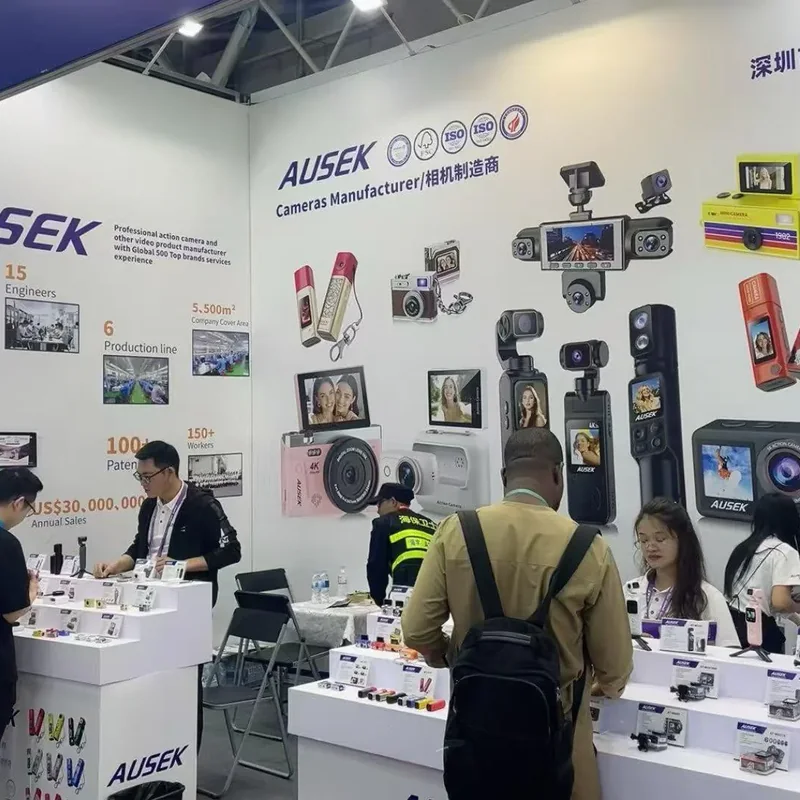
Image: AUSEK exhibition booth for multi-category camera product-line planning
Before choosing model numbers, define what each category is supposed to do. A product line becomes confusing when several products target the same user, price tier and sales message.
Useful planning questions include target user, channel, price tier, use case, accessory bundle, packaging style, compliance needs and inspection method. Once these answers are clear, product selection becomes easier and sample review becomes more focused.
Compare Category Roles
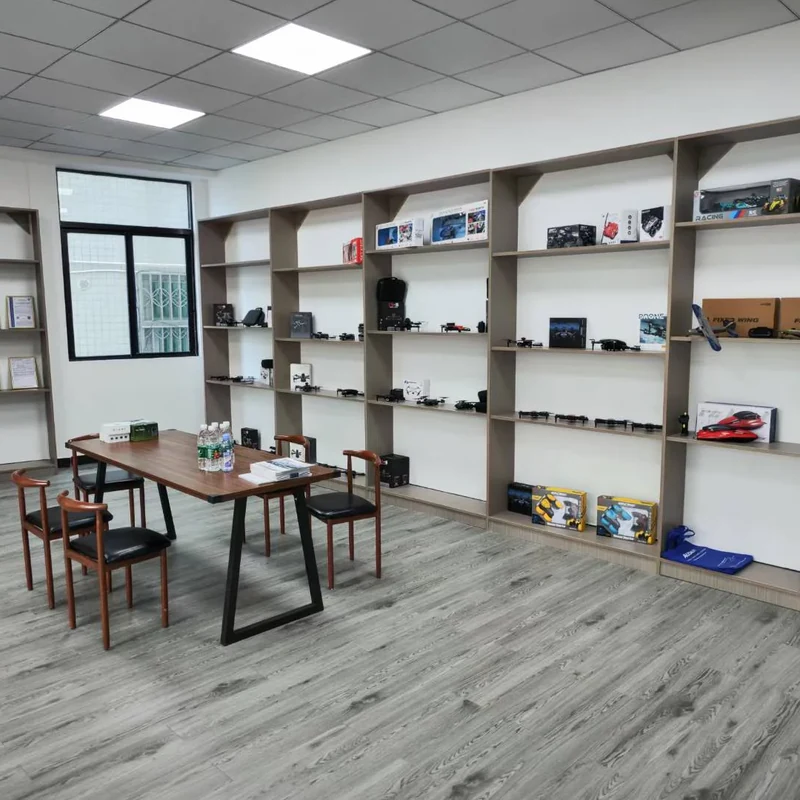
Image: Product showroom sample room for comparing camera category roles
Action cameras usually serve outdoor sports, movement recording, mounting and travel adventure. Buyers should review stabilization, waterproof method, accessory bundle, battery behavior, mounting compatibility and packaging claims.
Pocket cameras usually serve compact handheld shooting, Vlog creation, travel recording and lifestyle content. Buyers should review handling, screen experience, charging method, menu simplicity, audio needs and portability.
Digital cameras can serve casual photography, beginner imaging, creator kits, travel content and giftable electronics. Buyers should review model-specific features, package contents, screen setup, zoom or focus needs and retail positioning.
Plan Around Channels, Not Only Specifications
Different channels need different product mixes. Outdoor sports channels may lead with action cameras and accessories. Creator or travel channels may use pocket cameras and selected digital cameras. Gift channels may review compact digital cameras, mini cameras or children's cameras depending on age positioning and safety requirements. Automotive channels need car cameras with clearer installation and reliability expectations.
Buyers should avoid using one generic marketing message across every camera category. The package and product page should explain the category role clearly.
Plan Price Tiers Packaging and Inspection
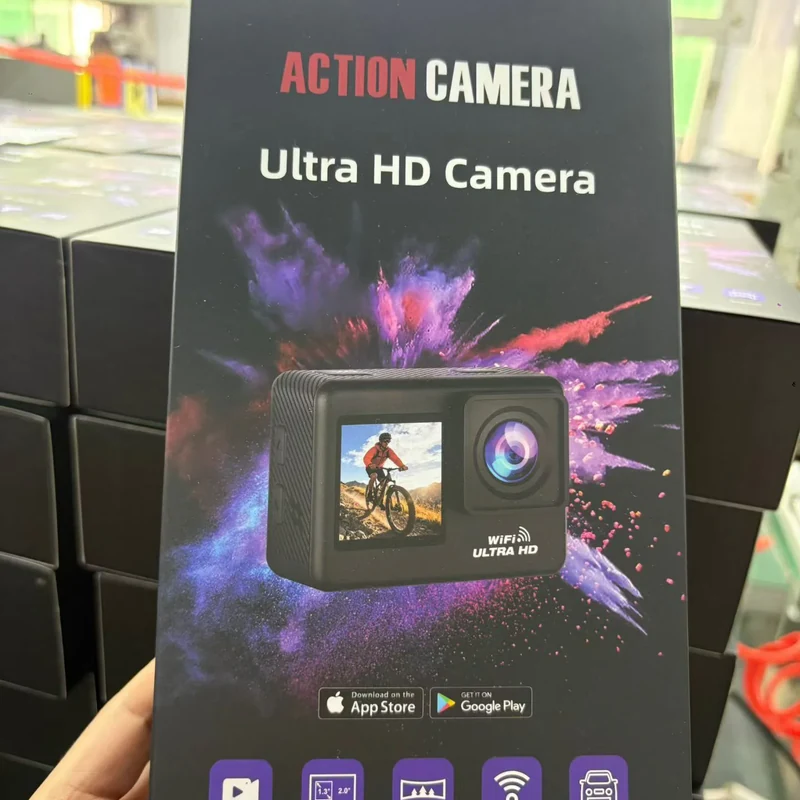
Image: Action camera retail box display for packaging and channel planning
Price tiers should include the full product package, not only the camera unit. Accessories, packaging, manuals, barcode labels, certification review, inspection and after-sales support all affect the final cost.
When a product line includes action cameras, buyers should define the role of camera accessories early. Mounts, waterproof housings, batteries and carrying items can create a stronger bundle, but they also change packing size, cost and inspection work.
Avoid Product Overlap
Product overlap happens when two categories promise the same use case at the same price tier. For example, an action camera and a pocket camera may both be called travel cameras, but the buyer should still separate outdoor mounting from compact handheld capture.
A better plan gives each category a role: action cameras for movement and mounting, pocket cameras for portable content, digital cameras for casual photography or starter kits, children's cameras for youth and gift channels, car cameras for vehicle recording and mini cameras for compact retail or creative gift scenarios.
Quality and Document Review Across Categories
Certification and compliance requirements depend on product model, target market, battery and charging details, wireless function, age positioning and package claims. Documents for one category should not be assumed to apply to another category.
Quality control should also vary by category. Action cameras may need accessory and mount checks. Pocket cameras may need screen and handheld-use checks. Digital cameras may need photo/video, menu and package review. Car cameras may need mounting and recording stability checks. Children's cameras may need additional safety and age-positioning review where relevant.
RFQ Checklist for Product-Line Planning
- Define target users and sales channels for each category.
- Select model candidates by category and price tier.
- Separate action, pocket, digital, mini, children's and car camera roles.
- Define accessory bundle and packaging style for each model.
- Confirm target markets and document review needs by model.
- Plan sample sequence before bulk orders.
- Ask how inspection will differ across selected categories.
Conclusion
Camera product-line planning is not about adding every available category. It is about giving each product a clear role in the buyer's channel and making the sourcing process repeatable.
Before asking for samples, buyers should share the target market, channel, product mix, expected quantity, price tier, packaging direction and certification needs. AUSEK can then discuss suitable categories, model candidates and quotation direction through the AUSEK contact page.