Bring the factory's engineering team into an OEM project while you are selecting and evaluating the camera. A mature model already provides a working product foundation, but your intended use, accessories and customer instructions still need to fit together. Technical input at this stage helps the brand choose a suitable product and carry a well-understood sample into the bulk order.
AUSEK has more than 20 R&D and design engineers, including over ten with more than ten years of industry R&D experience each. Its international trade team works with engineering and production on product questions and samples. For a buyer, the value is access to the people who can explain the camera and connect a purchasing decision with the way the product is made.
A better model choice starts with a real use
A buyer may ask for a small 4K camera when the real requirement is to record from a particular mounting position and retrieve footage on a particular device. Those extra details can change which model is suitable. Controls that are convenient in the hand may be difficult to reach once mounted; a screen that helps handheld use may not be visible in the intended position.
Explain the complete task before settling on the specification. Engineering knowledge can narrow the mature-model range around the functions and operating conditions that matter. AUSEK's existing camera range gives that discussion physical candidates, so the buyer can move toward a sample with a clear reason for choosing it.
This also improves commercial preparation. Once the team understands how the selected camera supports the intended use, it can build photography, demonstrations and product copy around that experience. The same explanation helps sales staff answer why this particular model belongs in the offer.
For a brand with a small team, that is a practical advantage of working with a manufacturer that has internal engineering resources. Market knowledge comes from the buyer; product knowledge is available from the people developing and making the camera. The combination helps resolve the selection before substantial launch work is committed.
Use the sample to get a decision, not another round of vague feedback
Suppose the sample records successfully but the resulting video does not play as expected on the buyer's chosen device. Simply reporting “the video is bad” leaves several possible questions unresolved. The original file, camera mode and playback route give engineering something specific to examine.
The next action should follow what that examination reveals. The buyer may need a different setting or clearer guidance, a different established model may be more suitable, or a reproduced product issue may require technical investigation. A useful engineering exchange explains what to do next and how the result affects the purchase.
AUSEK's trade team provides the route into that discussion. Its testing resources include equipment for areas such as USB cables, displays, power adapters and battery capacity. A relevant product question can therefore be related to both engineering knowledge and the available checking resources, with the actual investigation agreed for the issue.
Keep the resolved explanation with the product. An operating point clarified during sample review can later support the manual and customer service. A suitable accessory arrangement can become part of the complete kit. The sample stage produces knowledge that the business can keep using after the order is placed.
Small OEM choices need to work as one product
Even when the camera's core design stays unchanged, the surrounding choices are connected. An accessory affects installation illustrations. A menu language affects the guide the customer follows. The final contents determine the package layout and how the recipient finds each item.
AUSEK's established-model OEM service supports discussion of logos, packaging, manuals and accessory combinations, along with model-specific startup or shutdown graphics and menu languages. Involve technical support where a proposed choice changes operation or requires confirmation of compatibility.
Approve the complete combination you intend to sell. A successful camera sample and an attractive packaging proof are useful, but the complete kit shows whether the instructions, accessories and main unit work together. That is the version sales staff will explain and customers will receive.
Engineering input is most valuable when it keeps the project focused on changes that improve this experience. Retain the mature product features that already serve the task, resolve the details that need attention and give the factory a clear product to reproduce.
Carry the sample's important decisions onto the production floor
The last step is turning the sample conclusions into a manufacturing reference. The chosen configuration, accessories, brand files and relevant operating requirements need to reach production and inspection together. Otherwise, valuable knowledge can remain in a sample email while the bulk order is described more loosely.
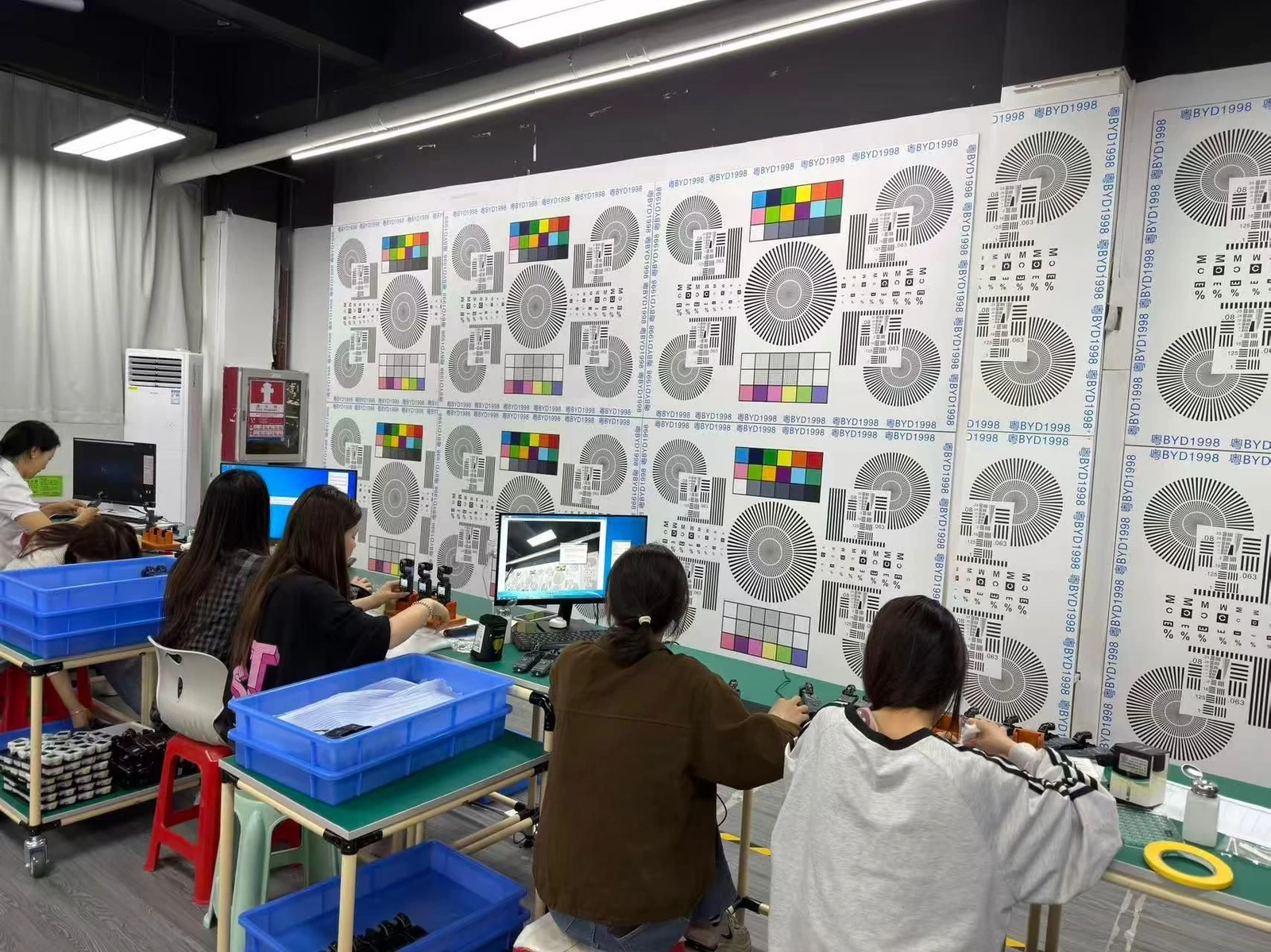
AUSEK's workshop includes assembly, aging-test, quality-inspection and packaging areas, with quality control covering incoming materials, in-process work, finished products and outgoing goods. Engineering clarifies the relevant product requirements; experienced production workers apply them in assembly; inspection checks the agreed results through the process. This creates a route from the buyer's approved product to the people making and checking it.
For later orders, keep that product reference and identify what is changing. A revised accessory or instruction can then be reviewed against an existing configuration. Work that remains valid carries forward, while the affected parts receive attention before the next batch.
When evaluating a factory's engineering support, bring one real use requirement or sample question to the discussion. Look for a clearer model choice, an explained result or a specific follow-up action. Send that requirement, the full model where known and relevant original files to AUSEK. Useful engineering support should move the purchase forward and leave the brand with a product it understands well enough to sell and reorder.