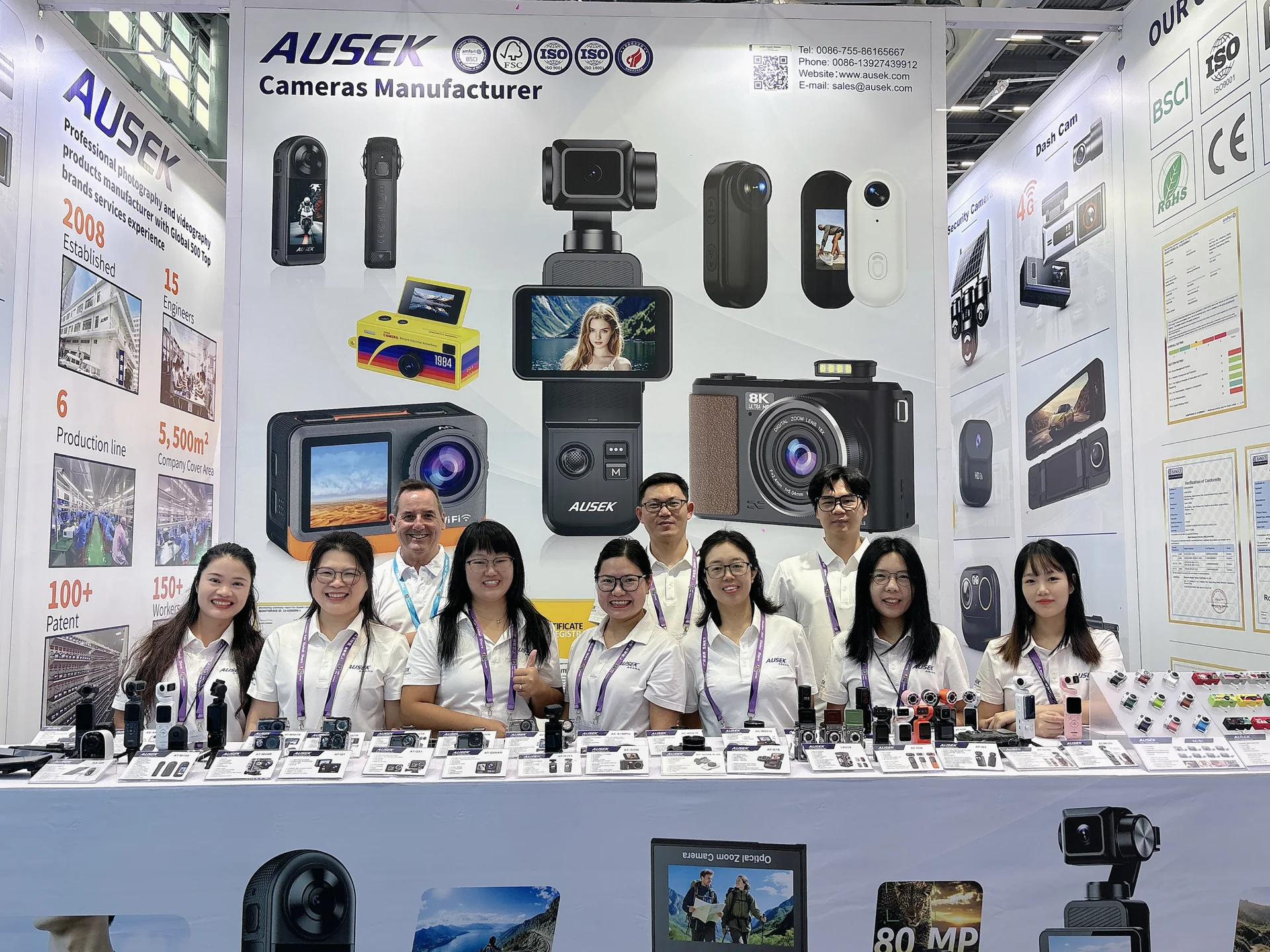
The first phase of the 140th Canton Fair ran from October 15 to 19, 2026, at the Pazhou Complex in Guangzhou. AUSEK's booth sat at D36–D37 and E21–E22 in Hall 19.2, and I was there for all five days. We had invited long-standing customers to meet us at the booth, and we received a steady flow of new visitors. Across five days, the conversations numbered in the hundreds.
Every fair ends with the same internal question: what did customers ask the most? This time, the answer was unusually concentrated — and the structure of those questions told us more about the camera industry than any single order could.
What we read into two recurring sets of questions
Questions about our M105 handheld pocket camera repeatedly included: "What's the difference between this and the DJI Pocket 3?" Buyers also asked: "What's the price? Can you ship a small batch? Can I get a sample? Can I sell this on cross-border platforms?"
One set uses a premium retail product as a reference. The other explores the practical terms of sourcing. Taken together, they raise a question for us: what business is the buyer trying to build around this camera?
Our reading after five days: these two question sets describe the product and commercial sides of a purchasing decision. The buyers walking the fair are brand owners, cross-border sellers, and distributors. They are not choosing a camera for themselves — they are choosing a product to build a business line on. The first set of questions asks: is this product good enough to carry my brand and survive in my channel? The second set asks: can I afford to test, launch, and scale this product under my own terms? Product appeal has to work alongside the cost and practical conditions of bringing it to market.
This is why the DJI comparison keeps coming up. DJI has effectively set the reference standard for what a pocket camera should feel like in the hand and produce in footage. Buyers use that standard as a measuring stick — not because they expect a Shenzhen factory to replicate DJI at a lower price, but because they need to know how far the gap is and whether the remaining gap matters for their market positioning. For an established brand, the useful comparison is which differences would matter to its own customers, at its intended positioning.
What established brands are actually looking for
Consider those questions from the perspective of an established brand. A new pocket camera will sit alongside products, customer expectations, and a reputation that already exist. This is how we interpret the manufacturing relationship such a buyer needs.
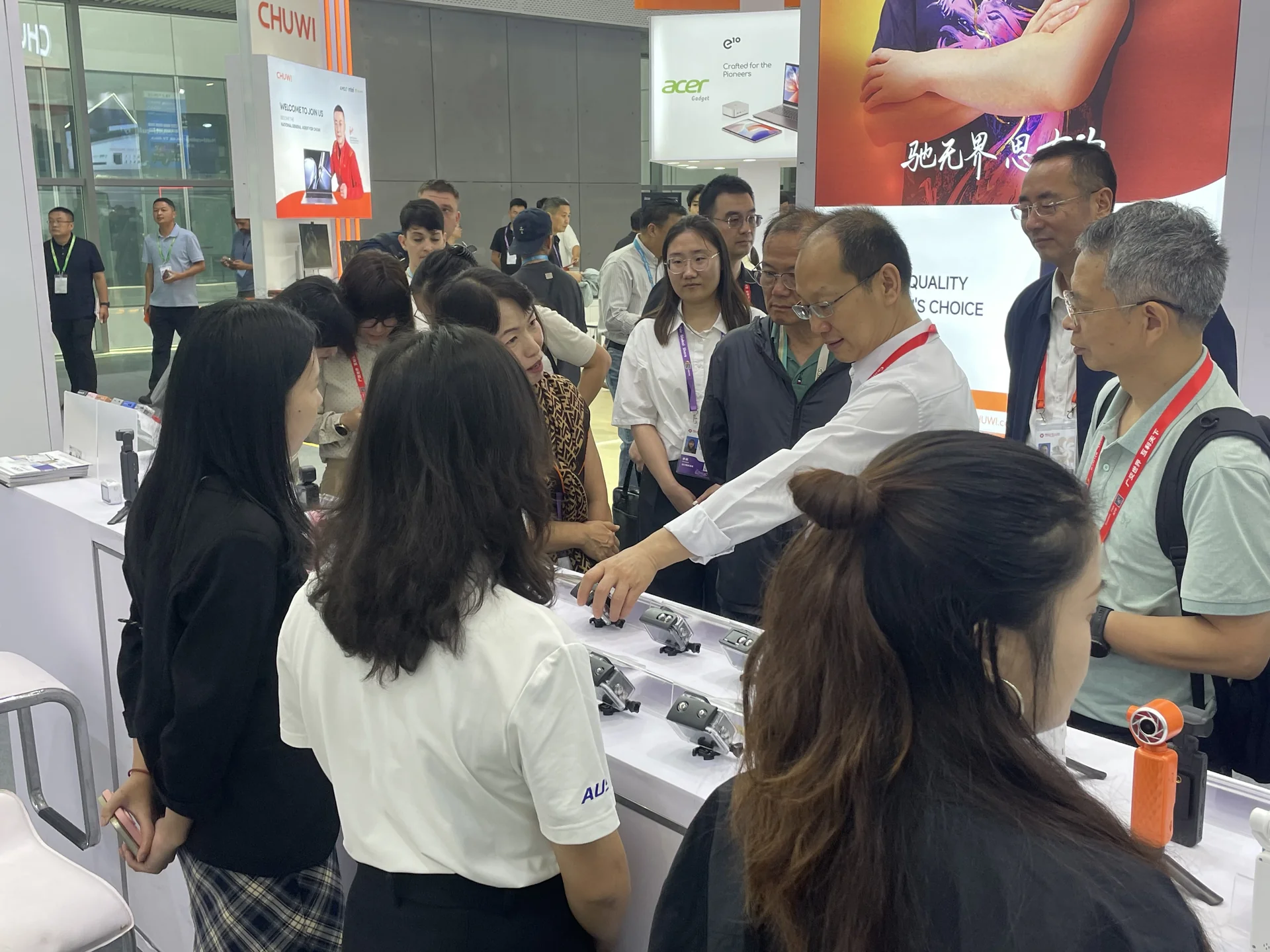
First, the product has to fit what customers expect of their brand. We had prepared memory cards in our demo units so visitors could shoot and review footage at the booth. For us, the value of this is that a buyer can form an initial judgment from an experience they produced themselves. Specifications, that first experience, and subsequent sample evaluation contribute different information to the purchasing decision.
Second, recognizable design gives brand investment something specific to build on. If competing listings look identical, a buyer has to work harder to explain why consumers should choose its version. A distinctive appearance can give product photography, packaging, and brand content a consistent identity. The experience of using the camera then determines whether that identity earns a good reputation. This is the commercial value we see in proprietary design: it can help a brand accumulate reasons to be chosen.
Third, we see product continuity as part of that investment. Once a brand has developed content, customer support knowledge, and channel familiarity around a category, a supplier changing direction can make that work harder to reuse. A clear manufacturing focus gives the buyer a better basis for planning subsequent products. This is one reason we came away from the fair thinking more carefully about which categories deserve sustained attention.
Retail benchmarks and manufacturing partnerships serve different business needs
There is a concept we kept returning to during our internal debrief: source factories and first-tier brands are not actually competing in the same game. DJI and Insta360 operate in retail, building consumer brands. We operate one layer upstream, serving the people who build their own brands and channels. Our interpretation is that a buyer can use DJI as an experience benchmark while evaluating a factory for an own-brand project.
That distinction defines the opportunity we see. Familiar retail products give buyers a shared reference for discussing experience, but an established brand still has to decide what fits its own audience, price positioning, and channels. A manufacturing partnership lets it develop a product offering under its own brand around those choices. The commercial task is different from purchasing a finished retail brand. Our opportunity lies in understanding that task well enough to connect product capability with workable OEM cooperation.
AUSEK has manufactured imaging products in Shenzhen since 2008. We supply neutral products and OEM versions of existing models, with branding, packaging, accessory sets, and other options discussed by model. Buyers can purchase samples for evaluation before proceeding to volume OEM orders.
What we take away from these five days
Our main judgment after these conversations is that comparison with leading brands can be an opening for source manufacturers. It gives us a clearer view of the experience buyers care about. The accompanying questions about samples, pricing, and supply tell us where the commercial discussion needs to go.
For established brands considering pocket or handheld cameras, we would start that discussion with the intended market and the role the product should play in their range. Those details make it possible to discuss meaningful product differences and a suitable cooperation scope.
Tell us your target market and product requirements.