For a new camera brand, the best first order is usually one well-defined product that the business has enough money left to sell. Choose an established camera, build one useful kit around it and give that offer a proper launch before funding a wider range. This concentrates inventory spending while preserving resources for photography, freight, sales content and customer acquisition.
The pressure to look like an established brand can push a newcomer toward several models, colors and bundles at once. Yet each variation creates stock before it creates demand. AUSEK's mature-model OEM route gives buyers a more practical starting point: an existing camera platform, samples for selection and branding options that can turn the chosen product into a complete retail offer.
Spend first on a product decision you can use
A sample is worthwhile when it resolves a buying decision. Start with a specific customer and recording task, then ask AUSEK to recommend relevant established models. A commuter recording a journey and a shopper choosing a playful camera gift may need very different products, even when both want a small camera.
Use the sample to decide whether the product fits that task and whether your team can explain it convincingly. Try the controls, record footage and use the proposed accessories together. If a function is awkward for the intended customer, settle it with the factory while the project is still small. Moving to another mature model at this point is much easier than changing a bulk order after branded materials have been prepared.
AUSEK's trade team connects sample questions with engineering and production. That access gives a new brand technical support without having to build an internal camera development team for its first launch. The approved sample then supports photography, demonstrations and instructions, so the work invested in selection continues to serve the launch.
A narrow range can still be a complete brand offer
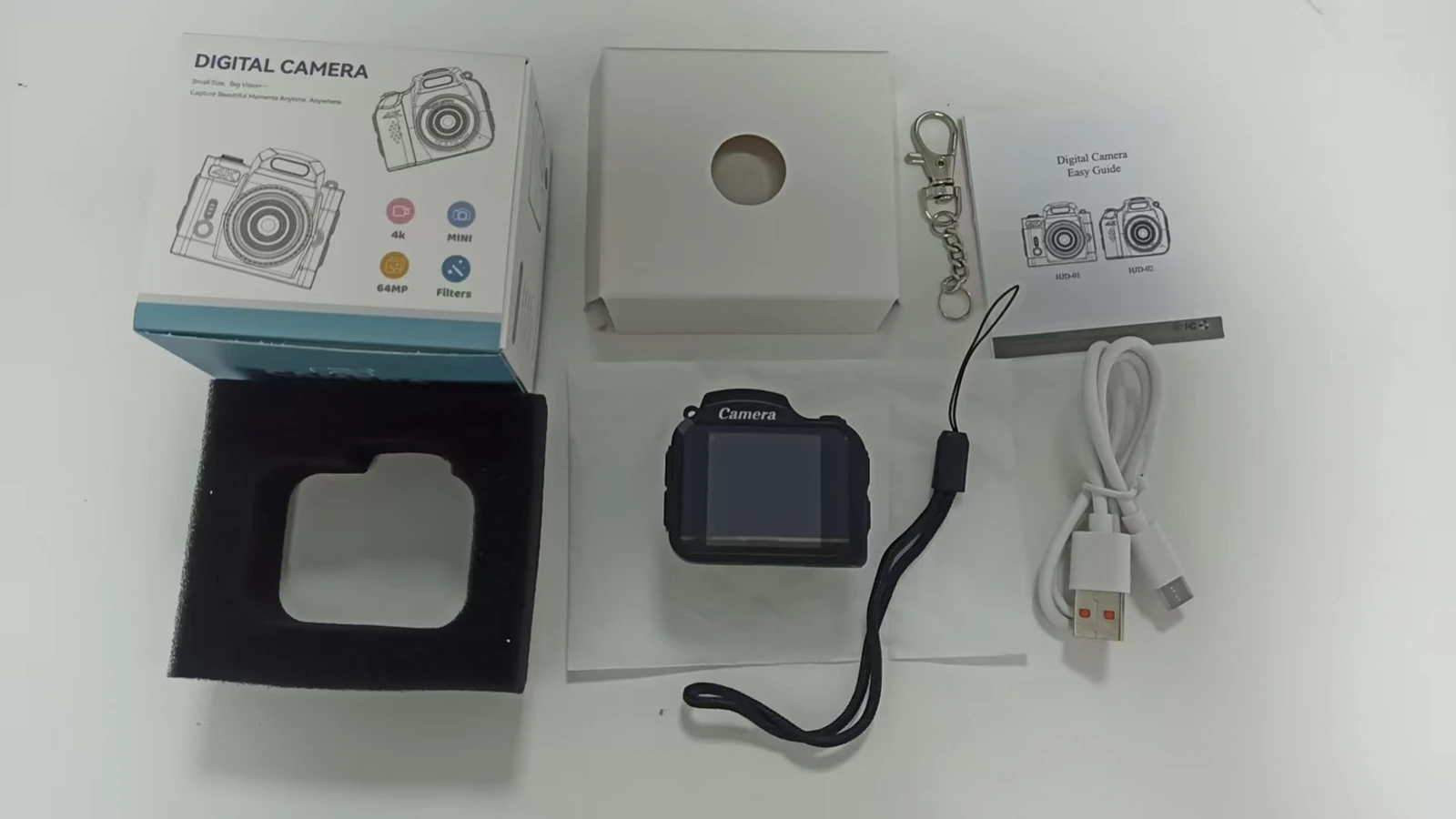
One model does not have to look unfinished. A coherent logo, a suitable package, clear instructions and the accessories needed for the main use can make a focused offer feel complete. These elements help customers understand what they are buying and how to begin using it.
AUSEK's OEM service allows buyers to discuss these items around established models, along with model-specific menu languages and startup or shutdown graphics. For the first order, prioritize changes the customer will encounter: a useful kit and clear guidance generally deserve attention before several decorative variants of the same product.
Retaining the existing camera structure and core functions also concentrates the project budget. The brand can use a manufacturing foundation that already exists and spend its additional preparation on the offer it wants to sell. A new housing or a substantially different technical design makes sense only when the customer benefit justifies taking on that larger project.
The same logic applies to packaging. A design that can serve repeat orders gives the brand more room than a box built around a short campaign. Keep temporary promotions in channel content or a separate insert where practical, so the main packaging remains useful when the campaign ends.
Count the commitment created by each extra version
AUSEK's standard-model OEM minimum is 500 units, while certain special models require 1,000 units. Confirm how the minimum applies to the selected model and proposed variants before dividing the order across colors or kits.
Consider a simple planning example. If each of two selected models requires 500 units, launching both creates a commitment to 1,000 cameras before freight and supporting materials. Launching one creates a 500-camera commitment. The example illustrates the effect of range size; actual quantities and pricing follow the selected project. Removing an unnecessary second model can therefore release more cash than negotiating a small reduction on every camera in an oversized launch.
Dedicated materials also deserve a place in the calculation. A printed box, custom accessory or model-specific manual may have its own purchasing quantity. Ask for the complete commitment, including materials that will remain after the first shipment. A payment schedule changes when cash leaves the business; it does not necessarily change the amount of inventory the business has agreed to buy.
Where the first objective is product evaluation or a channel trial that does not require custom branding, discuss AUSEK's unbranded supply route as well. Its availability and terms can be compared with OEM before committing to branded stock. Choose the route that gives the first order a clear commercial purpose.
Let the first sales earn the next investment
Set the product order inside the full launch budget. A camera that arrives without usable content, an effective sales page or customer guidance still needs investment before it can perform commercially. Reserving money for that work is part of controlling inventory risk.
Once the product is selling, customer behavior can guide the second purchase. Repeat the kit if its appeal is clear. Add a different accessory if buyers repeatedly ask for a new use. Add another model when it serves demand the first camera cannot meet. Each decision then has a reason beyond making the catalog larger.
AUSEK's established range, OEM support and engineering communication make it possible to develop the offer in stages. The existing sample, brand files and product knowledge give repeat orders a starting point, while another mature model can be assessed when the business is ready to expand.
For the first discussion, send AUSEK the intended customer, main use, target market and quantity you are prepared to fund. Ask for a suitable model and one complete kit. A focused launch gives the first stock purchase a job your business is equipped to carry through.