A camera sample gives a buyer something concrete to evaluate: recorded footage, controls, charging, accessories and the experience customers will have. Moving to a bulk order brings another question: how will those agreed product requirements carry through production?
Look at the connection between sample confirmation, checks during manufacturing and the complete package prepared for shipment. At AUSEK, quality control covers incoming materials, in-process inspection, finished products and outgoing inspection. For brands and cross-border sellers, understanding these stages helps connect the camera they choose with the product they plan to sell.
Make sample approval useful for the order
Sample evaluation works best when it reflects the intended use. Record footage in the modes you plan to promote, try the controls and playback, charge the camera, and fit the accessories selected for the bundle. Keep the recording settings and test conditions with your observations so later comparisons have a clear starting point.
Turn that feedback into an agreed product description. The model, selected configuration, software or menu requirements, accessories and packaging all matter. A change to the bundle can affect the customer experience even when the camera itself stays the same. If a revised sample is needed, identify which changes have been accepted before moving ahead.
AUSEK supports sample purchasing and OEM orders based on existing models. Cooperation moves from product selection and sample confirmation to brand files, product configuration and the bulk order. Its sales team coordinates with engineering and production, giving buyers a way to carry sample feedback into the order discussion.
For a seller, this preparation also supports product listings: the camera, functions and kit shown in the listing can follow the configuration agreed for supply.
Follow the requirements into materials and assembly
Incoming quality control (IQC) focuses on materials and components entering production. In-process quality control (IPQC) addresses work during manufacturing. These stages help catch issues where they arise, before they become problems in a completed camera or packed order.
When discussing a selected model, connect the checks to its practical use. Charging depends on the relevant components and connections; buttons and screens affect operation; assembly affects how parts fit together. This makes a factory discussion more useful than simply counting inspection stations.
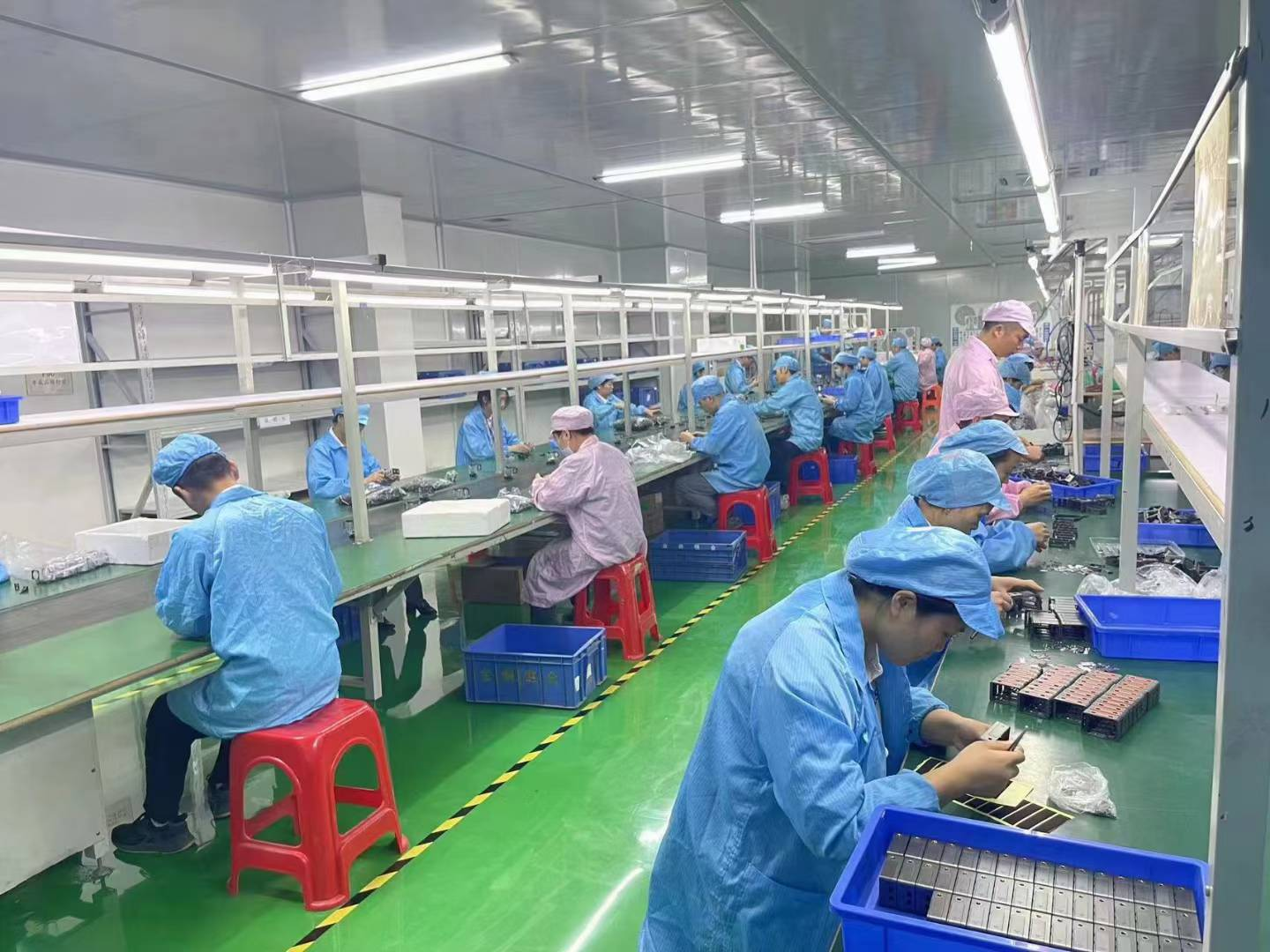
Camera assembly workstations, with components arranged beside the operators.
AUSEK’s workshop includes assembly, aging-test, quality-inspection and packing areas. Its equipment includes USB-cable, display, power-adapter and battery-capacity testing equipment. Together with IQC and IPQC, these facilities support quality control across components and production work.
For an order discussion or factory visit, choose one intended model and follow how its requirements move between these areas. Ask how a sample change or an issue found during production is handled before the order proceeds. This keeps the discussion tied to the product your customers will receive.
Understand what each finished-product check tells you
Finished quality control (FQC) focuses on the completed camera. Recording, playback, controls, charging and the selected accessory combination are useful starting points for discussing the model’s functional checks.
Reliability testing addresses a different question: how a component or product performs under repeated use or specified test conditions. A camera switching on during a functional check and a connector undergoing an insertion-life test provide different kinds of information. The intended use helps determine which tests matter for the selected model.
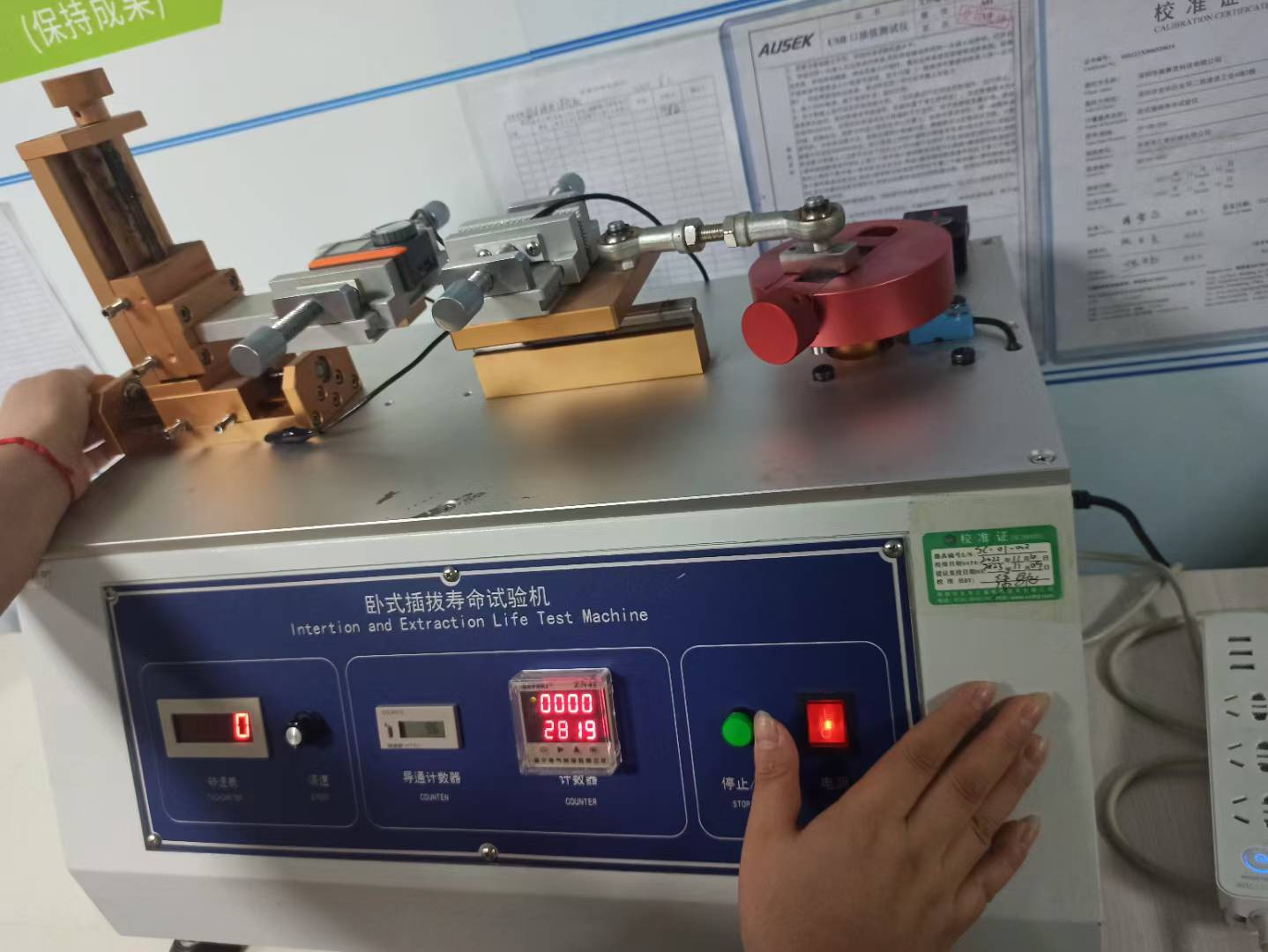
Plug insertion and extraction life-testing equipment at AUSEK.
AUSEK’s testing capabilities include plug-life, touch-screen, cable, corrosion, vibration and temperature tests. Buyers can relate these capabilities to the functions and handling their product is intended to support, then discuss the applicable test items, conditions and results for the order.
When comparing a sample with units from a production batch, use the same recording mode, accessories and test conditions. This makes the comparison easier to interpret. If a difference appears, describe where and how it occurs so the factory has a clear issue to investigate.
Include the retail package in outgoing inspection
Outgoing quality control (OQC) brings attention to the order before shipment. For an OEM camera project, the package includes the main unit, accessories and customer-facing materials. Correct kit contents, language and branding are part of delivering the product the seller has prepared to launch.
AUSEK’s OEM options include logos, packaging, manuals, accessory combinations, startup and shutdown screens, and menu languages, according to the selected model. Its OEM and bulk supply service connects these choices with product and order preparation.
Bring the agreed bundle and brand materials into the shipment discussion. For a repeat order, identify what remains the same and list any changes separately. This helps purchasing, production and sales work from the same description of the next batch.
Use four checkpoints to discuss your camera project
| Checkpoint | What the buyer clarifies | AUSEK support to discuss |
|---|---|---|
| Sample confirmation | Intended functions, configuration and kit | Sample purchasing, product selection and coordination with engineering |
| Materials and production | How agreed requirements relate to components and assembly | IQC, IPQC and the workshop’s production and testing areas |
| Finished camera | Relevant functions and test conditions | FQC and testing capabilities for the selected product |
| Shipment preparation | Camera, accessories, languages and brand materials | OQC and OEM package requirements |
AUSEK combines these four quality-control stages with coordination between sales, engineering and production. Buyers can explore AUSEK’s manufacturing background, then focus the conversation on the model and bundle they are considering.
Send your intended camera type, target market, key functions, expected quantity and accessory plan to sales@ausek.com. If you have already evaluated a sample, include the feedback so the next discussion can move toward the product requirements for your bulk order.