When sourcing action cameras from overseas, you will rarely visit the facility before placing your first order. That makes the "factory or trading company" question less about labels and more about evidence you can cross-check remotely. A trading company can still be a capable partner, and a company calling itself a manufacturer can still outsource everything. What matters is whether the entity you are talking to actually participates in the production of the specific action camera model you intend to buy — and whether that claim survives independent verification.
Here is a practical framework for making that judgment from a distance, followed by one manufacturer whose basic facts buyers can check directly.
1. Ask Questions About Specific Production Stages
Anyone can quote a price and a datasheet. Details about production stages give you leads you can cross-check against documents, samples, and live walkthroughs — though no answer alone proves who actually builds the product. For action cameras, useful test questions include:
- Which stages of assembly are done in-house — SMT, lens alignment, firmware loading, final QC, packaging?
- What is the current firmware version of the model you are quoting, and can menu languages or the boot-up screen be modified for my brand?
- What is your incoming inspection procedure for key components like image sensors and batteries?
- For my target market, which compliance documents (CE, FCC, RoHS, and so on) already exist for this exact model, and who issued them?
Treat the answers as material for cross-checking rather than as proof. Ask for specifics — which stages are in-house, what the current firmware version is, how incoming components are inspected — and then test those claims against documents, a sample, or a live look at production. A supplier that can route questions to its engineering team, or that points you to verifiable records, gives you more to check than one that only restates the datasheet.
2. Use Documents You Can Verify Independently
Conversations are easy to fake; cross-referenced documents are harder. Practical checks include:
- Business registration and scope. Ask for the business license and check whether the registered scope includes manufacturing, not only trading or export.
- Compliance reports and certificates. Request the test report for the exact model number, not a generic certificate. Reports let you match the product and model to the named parties involved in its certification. Keep in mind, however, that the applicant or manufacturer named on a report does not necessarily identify the actual producer — the equipment authorization applicant may not be the actual manufacturer. Use these documents to cross-check claims, not to draw conclusions on their own.
- Photos and video with proof of currency. A dated video call showing the production stages relevant to your discussion — such as assembly stations or burn-in racks, where applicable — is more informative than a polished corporate video. Ask to see the stages related to your model or a closely related one, and use what you see to cross-check the supplier's answers, not as proof of the entire production chain by itself.
- Sample forensics. Order a sample and examine it: firmware version screens, PCB markings if accessible, packaging consistency with claimed OEM capability. Remember, though, that a sample is a reference for the agreed configuration — one sample alone cannot prove batch-level consistency. Batch behavior is what production control and inspection records demonstrate.
3. Understand the Relationship Between the Signing Entity and the Producer
This is the point overseas buyers most often get wrong. The company that signs your contract, issues the invoice, and receives your payment does not have to be the same legal entity as the factory that builds the product. Many manufacturers operate a separate export or sales company; some groups use different entities for domestic production and international settlement. A name mismatch is not, by itself, evidence of deception.
The correct response to a mismatch is not suspicion but a direct question: "What is the legal relationship between the contracting entity and the production facility, and can you document it?" Legitimate manufacturers answer this plainly — for example, showing shared ownership, a group structure, or an authorization letter. The red flag is not the mismatch; it is an unwillingness or inability to explain it. Conversely, do not assume capability from a trading company's name either — an experienced trading partner with a stable factory relationship may serve small or mixed orders better than a factory that will not prioritize them. Judge each party on the evidence above, not on the word "factory" or "trading" in the company name.
4. What a Verifiable Manufacturer Looks Like in Practice: AUSEK
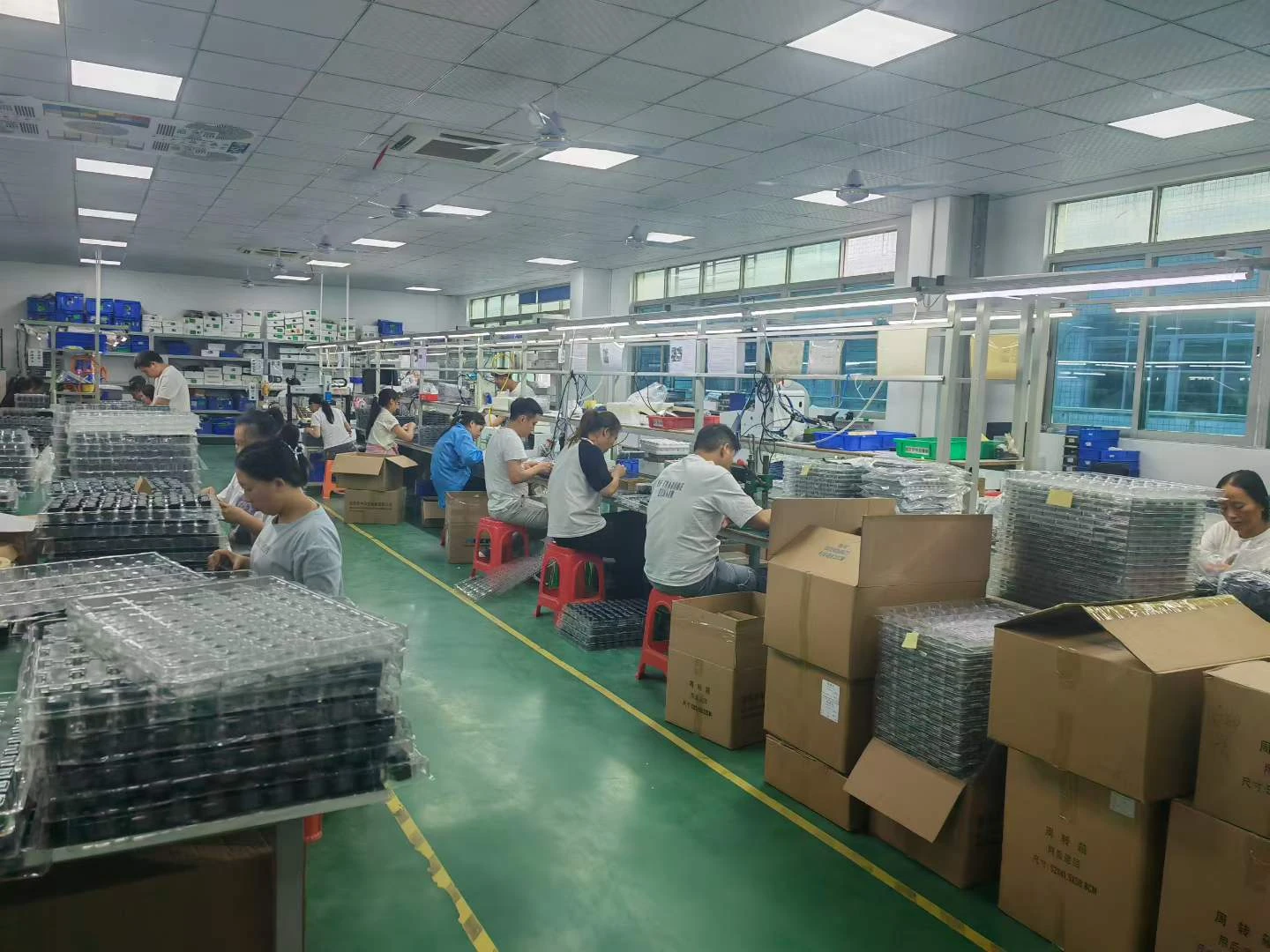
AUSEK is one example buyers can evaluate against the criteria above. AUSEK has manufactured imaging products since 2008, with action cameras as one of its businesses, and operates in-house assembly, burn-in, quality inspection, and packaging areas, with samples and OEM arrangements available for part of the lineup.
Each point below is a concrete item you can check during supplier qualification:
- Production involvement. Assembly, burn-in, inspection, and packaging give you specific stages to ask about. During a video call, request a live look at the stages relevant to your model and compare what you see with the agreed configuration and process flow.
- OEM depth. Depending on the model, customization can extend to firmware-level items such as boot-up screens and menu languages, alongside the usual branding options. Asking by model which specific items can be modified, and how each change can be confirmed, gives you a concrete way to check how your contact's role sits within the supply chain and who actually executes the work.
- Quality control structure. AUSEK's four-stage QC process — IQC, IPQC, FQC, and OQC — covers incoming materials, in-process production, finished goods, and outgoing shipments. For buyers, the practical value is in the records behind each stage: ask how checks are documented, what happens when a stage fails, and how results tie back to your model and batch.
Ask for the model-specific compliance reports, request a live walkthrough of production, evaluate a sample against the agreed configuration, and clarify which entity will sign and receive payment and how it relates to the production site. If the answers come back specific to your model and can be verified through documentation or samples, that is a concrete check on how directly your contact is involved in building your action camera.
5. A Short Verdict
The factory-versus-trader question is really a verification question. Test whether the supplier can discuss production-level detail for your specific model, whether model-specific documents exist and name the right parties, whether a live look at production is possible, and whether any gap between the contracting entity and the producer is explained rather than hidden. Suppliers that pass these checks — whether structured as a factory, a factory group, or a factory-backed export entity — are the ones worth sampling. Those that deflect them are telling you something, whatever their business card says.