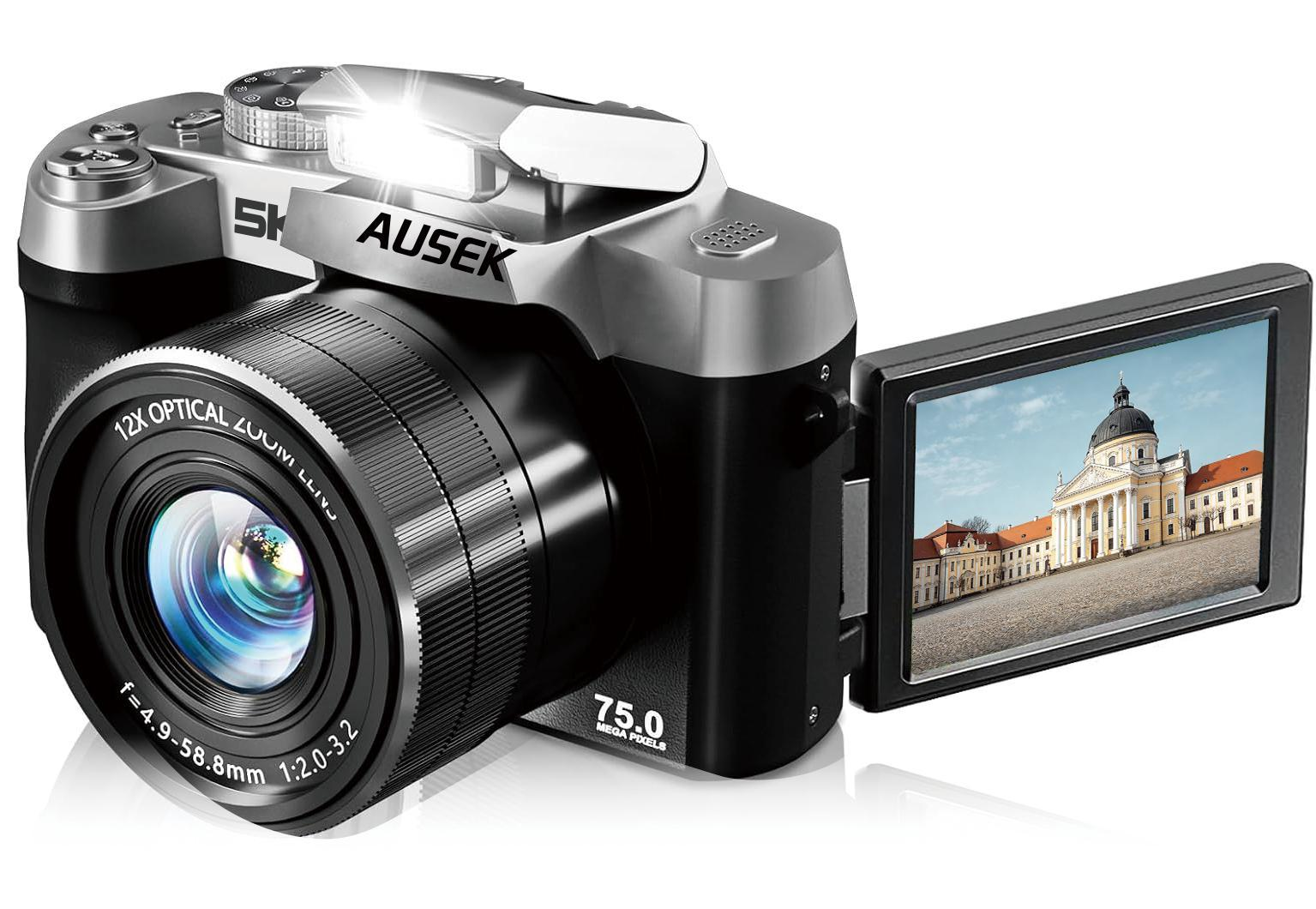
A flip screen gives a digital camera an advantage that a shopper can understand in seconds: the person in front of the lens can see the frame. For selfies, that means checking headroom and background. For a vlog, it means seeing whether the presenter and the object being discussed are both visible. These are useful starting points for a retail demonstration because the benefit appears during an ordinary action.
AUSEK AC-WD09(12X) lists a 180° flip screen and autofocus. Brands and retailers can build a clear product introduction around three experiences: taking a selfie, recording a presentation and reviewing an everyday photo. Each answers a different question about using the camera, without requiring the customer to begin with a long specification chart.
The first demonstration: let the shopper adjust the frame
Turn the screen toward the person holding the camera. Ask them to change the angle slightly and watch the background move. Then invite a second person into the picture and check whether both fit comfortably. The screen gives immediate feedback about position and framing; the customer can see what a change in angle actually does.
For an online product page, film that same sequence from the side so viewers see both the screen movement and the person using it. Follow with a real sample photo taken during the demonstration. The exterior view explains the control; the photograph shows what was captured.
Vlogs: check the shot from where the presenter sits
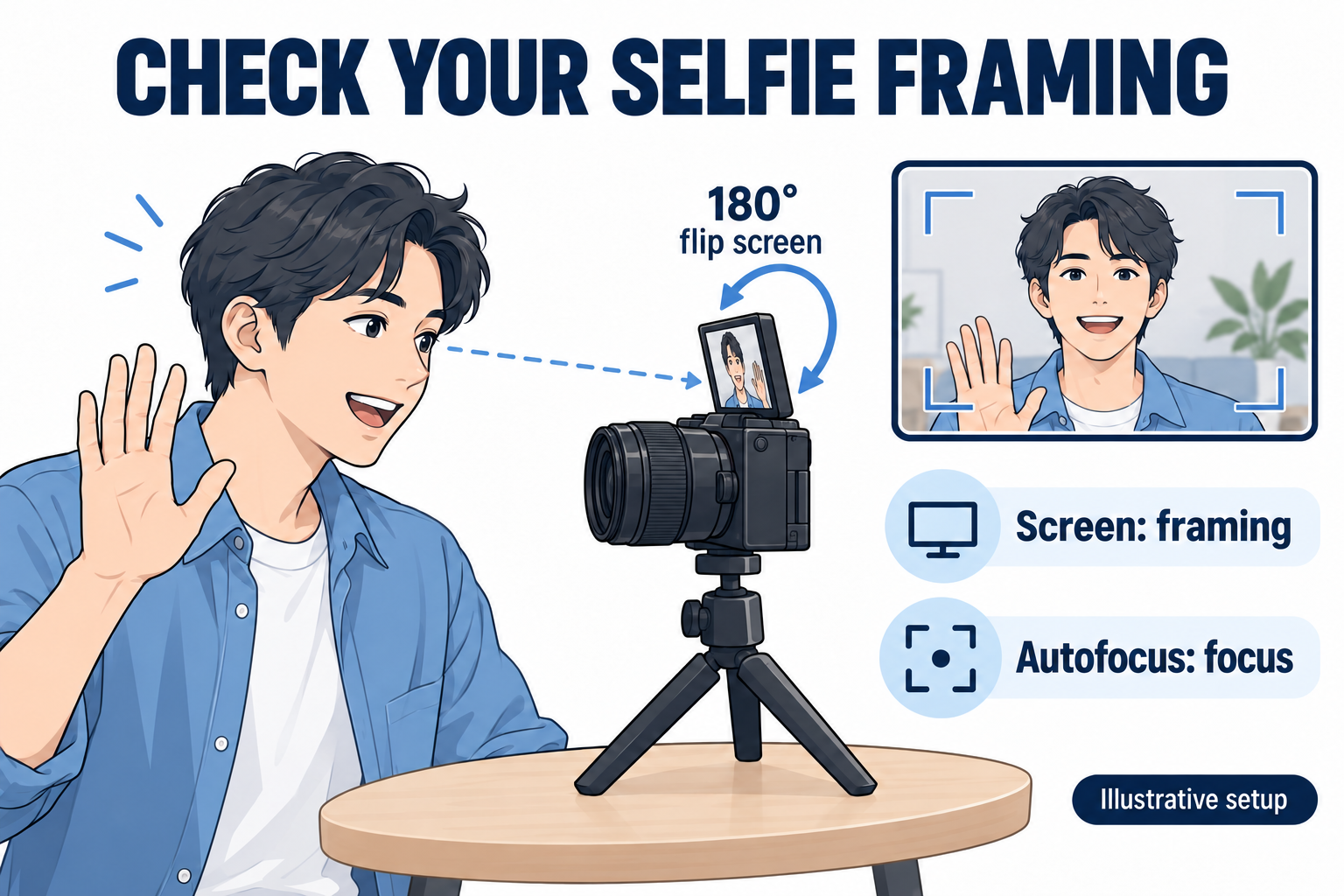
A fixed-position vlog often begins with the same routine: place the camera, sit down, check the framing and adjust the subject. A screen facing the presenter makes that last step easier to handle from in front of the lens. The presenter can check whether a product held above the table fits the picture before beginning the full explanation.
The screen is also a practical cue for positioning, not a place the presenter needs to watch continuously. Check the shot, then look back toward the lens when speaking. If the presentation moves from a face to a small object, record a short trial and review the actual focus. Autofocus and a flip screen have different roles: one helps with focusing, while the other lets the presenter see the composition.
Everyday recording: complete the first-use loop
For someone evaluating a camera for everyday use, opening the screen is only one part of the experience. Show a complete sequence: turn the camera on, frame an object, take a photo, find the image in playback and return to shooting. Then repeat with the screen facing the user for a selfie.
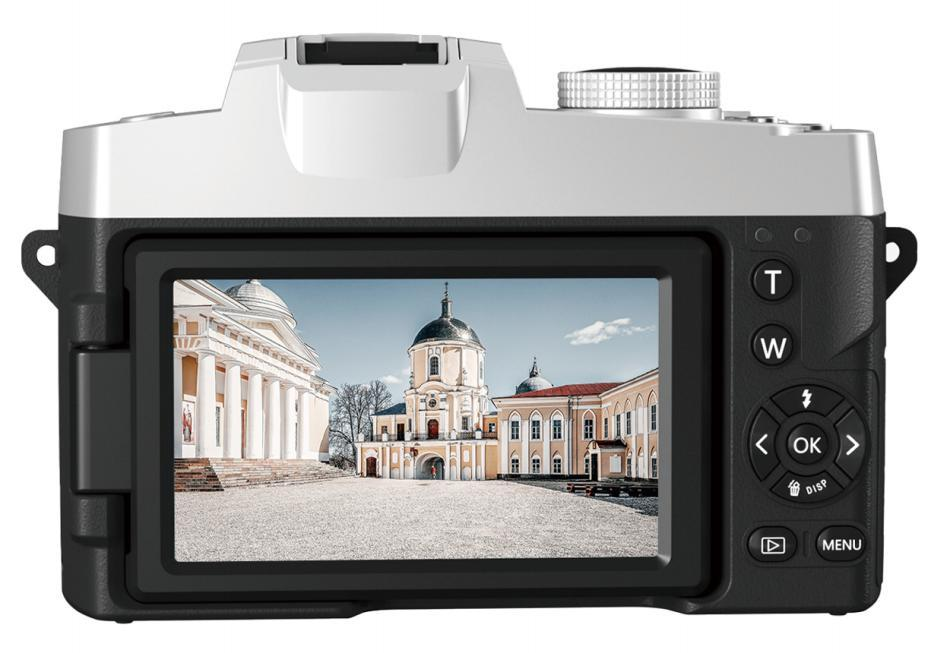
This approach gives a retailer useful material for the shelf, the online listing and a short getting-started video. It also helps a shopper judge whether the controls make sense to them. A clear first-use sequence is more informative than opening and closing the screen several times without showing what the camera records.
Give each sales page one clear entry point
A selfie-focused page can lead with the screen facing the user and the resulting portrait. A vlog-focused page can lead with the presenter seated in front of a fixed camera. A general everyday-camera page can show the capture-and-playback sequence. The same camera can support these different explanations, but the first image and opening paragraph should match the audience selected for that page.
A U.S. online seller could use an English demonstration built around an unboxing presentation. For a Brazilian retail partner, a Brazilian Portuguese version can guide a customer through the same first-use sequence in store or online. Keep the actual controls visible and match any translated instructions to the sample being shown. This makes localization useful at the point of use, beyond simply changing the headline.
Plan the branded version around the first experience
When discussing the AUSEK digital-camera range, specify AC-WD09(12X) and the experience your page will lead with: selfies, vlogs or everyday photos. AUSEK can discuss samples and established-model OEM options such as logos, packaging, manuals and accessory combinations. Send the target market and intended presentation through the contact page so the sample, retail content and packaging can be developed around the same product use.