Choose an action camera manufacturer by checking whether its products fit your customers, whether it can explain how the proposed camera is made and checked, and whether its sample and quotation describe the same deliverable. A useful first comparison ends with a small supplier shortlist and specific models to evaluate.
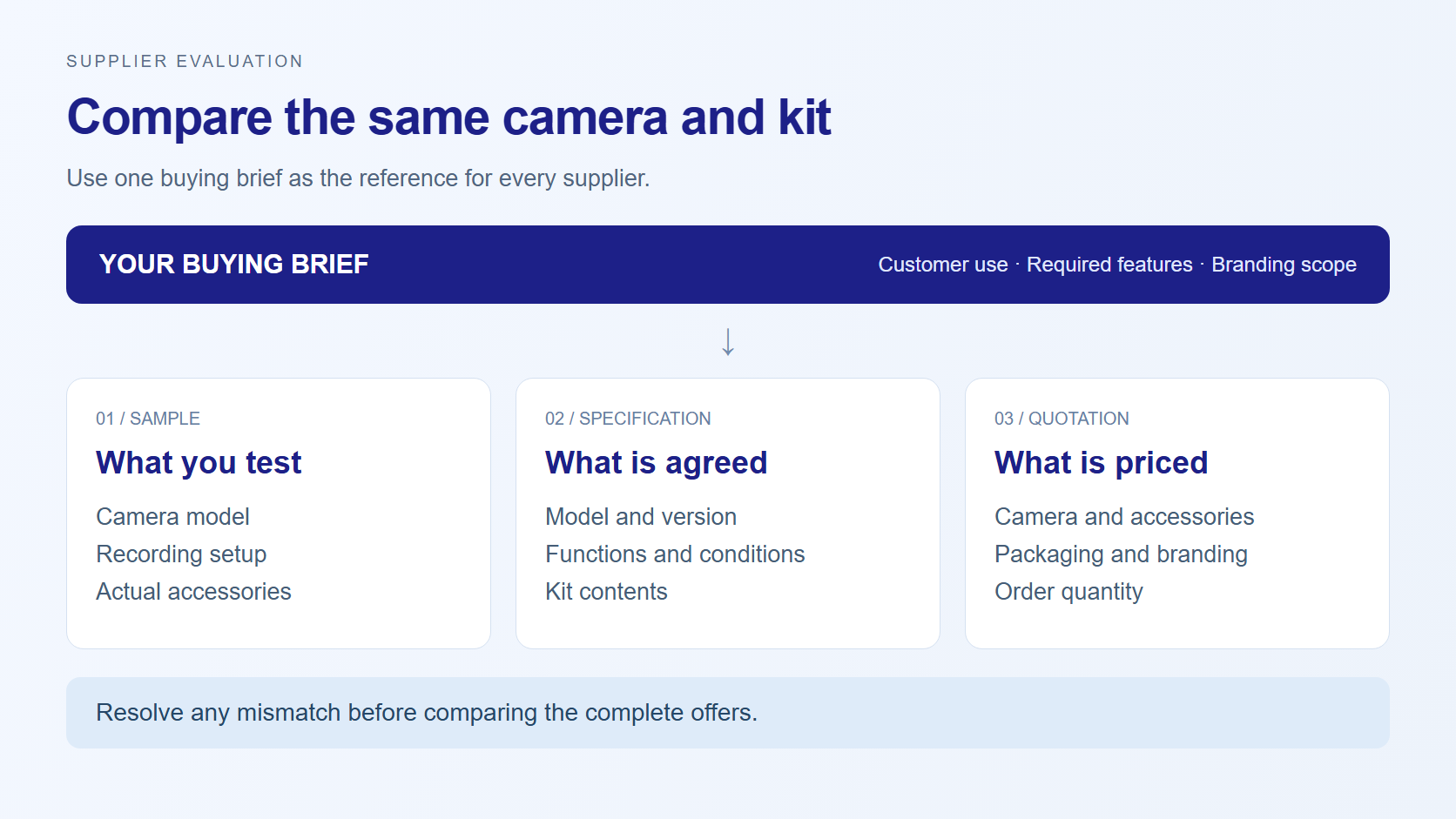
For an importer or distributor, this starts with the product you intend to sell. A camera for travel commentary needs a different discussion from a kit intended for mounted outdoor recording. Sending the same short buying brief to each supplier makes their answers easier to compare before you spend time on samples.
Give suppliers a sales plan they can respond to
State your destination market, sales channel and main customer use. Add the features you must keep, a reference product if you have one, and whether you want neutral stock or your own branding. An estimated order quantity and purchase-budget range help narrow the proposal; if either is undecided, say so and start with the product direction.
For example, a seller planning a travel-commentary kit could ask for front-facing framing and a compatible wireless microphone, with the microphone included in the proposed bundle. This is an illustrative brief, not a customer order. It gives a supplier enough detail to propose a model, explain the audio arrangement and identify anything still missing.
Keep the brief short enough to read in one message. Its purpose is to get a relevant answer: which camera, which accessories, and why that combination fits. A long catalogue without a reason for the recommendation leaves the selection work with you.
Keep candidates that explain their model choice
A supplier's first proposal should connect the camera to your intended use. For travel commentary, ask how the user frames themselves and records speech. For mounted filming, ask how the camera attaches and how the user starts and checks a recording. Use the answers to check whether the proposal covers the complete shooting setup.
AUSEK's action camera range includes models with different screen, audio and recording options. Use the action camera collection to identify candidates, then ask for the specification and proposed bundle for the exact model. Detailed feature comparisons belong at this stage, after the supplier understands your sales direction.
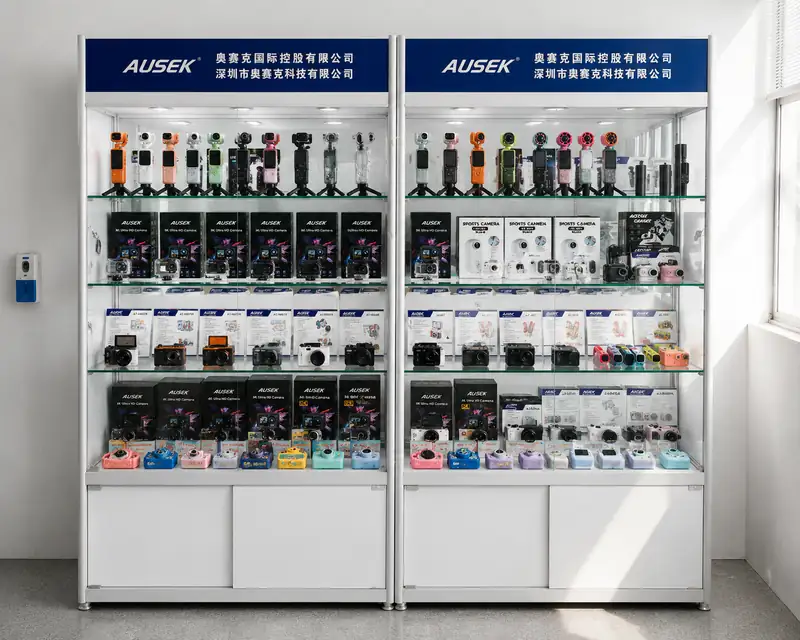
Review the factory around the camera you may order
AUSEK LIMITED was founded in 2008. Its Shenzhen operation includes a 5,500 m² workshop and six production lines. These facts describe the manufacturing operation. When reviewing a supplier, connect that background to the product you are considering: where it is assembled, what is checked during production and how the finished kit is packed.
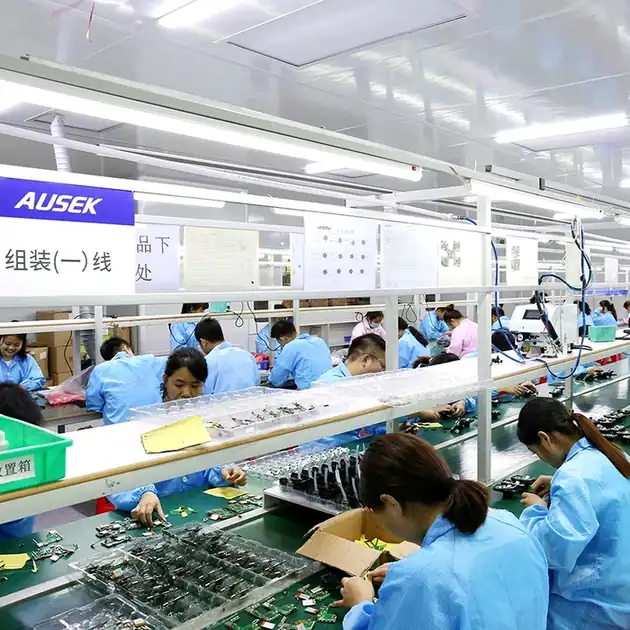
AUSEK uses incoming, in-process, final and outgoing quality-control stages, commonly abbreviated as IQC, IPQC, FQC and OQC. To make that process useful for a buying decision, discuss the approved specification, reference sample and inspection criteria that would guide your order. The manufacturing and quality FAQ explains the stages.
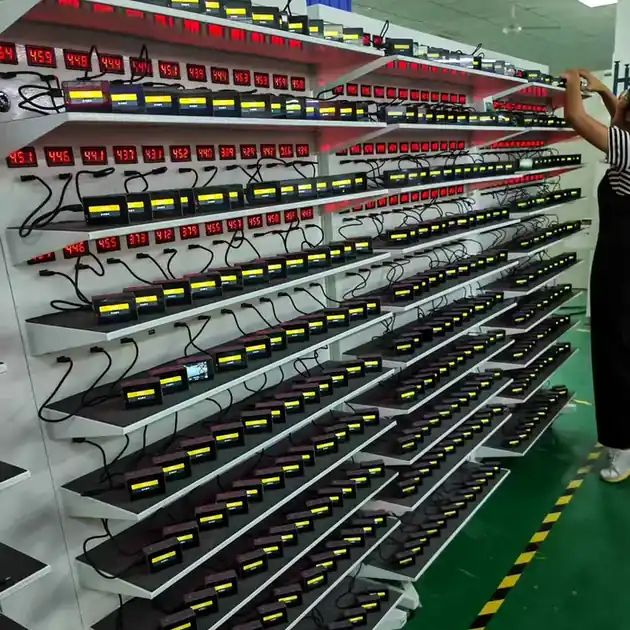
For a dual-screen camera, useful discussion points include display operation, recording and playback, controls, and the selected accessories. Ask how a mismatch is identified and handled against the agreed specification. A factory photograph can show an operation or piece of equipment; the inspection scope still needs to be explained for your order.
Compare the sample with a complete quotation
Once a product looks suitable, request a quotation that names the camera, accessories, packaging and branding scope. A sample with a microphone and housing does not establish that both are included in the quoted unit price. Ask the supplier to list the contents and separate any items you would buy independently.
Read the model number and configuration together. If the sample, specification sheet and quotation use different descriptions, resolve the difference before selecting a supplier. A changed accessory may affect the instructions or packaging, even when the camera model stays the same.
| What you receive | What it lets you decide | What to do next |
|---|---|---|
| Named model with a clear use-case explanation | Whether the product deserves sample review | Compare the features essential to your customers |
| Factory explanation linked to that product | Whether the production discussion is specific enough | Agree the relevant sample and inspection references |
| Sample and itemized quotation that match | Whether suppliers are quoting comparable kits | Compare commercial terms on the same scope |
| Unexplained model or accessory differences | That the proposal still has a gap | Request a corrected specification or quotation |
Decide what the next supplier conversation should resolve
If a required function is unavailable, remove that model from the shortlist. If the function is suitable but an accessory or brand detail is unclear, keep the candidate and ask a focused follow-up. This separates a product mismatch from a proposal that only needs clarification.
Before confirming an order, agree the quantity, final configuration, sample reference and delivery arrangement. Company history and workshop size provide context, while your order details determine what the supplier is being asked to deliver.
To discuss an action camera project with AUSEK, send your buying brief with the target market, main use, reference product and branding direction. Include the expected quantity if known. Ask for suitable models and an itemized bundle proposal so the next discussion can focus on samples and a comparable quotation.