A pre-recording action camera gives fishing retailers a useful product story: an angler can react to a bite first and still have a chance to save the moments leading up to it. That opening matters. A clip that includes the rod movement, the angler’s response and the fight tells more of the story than a recording that starts halfway through.
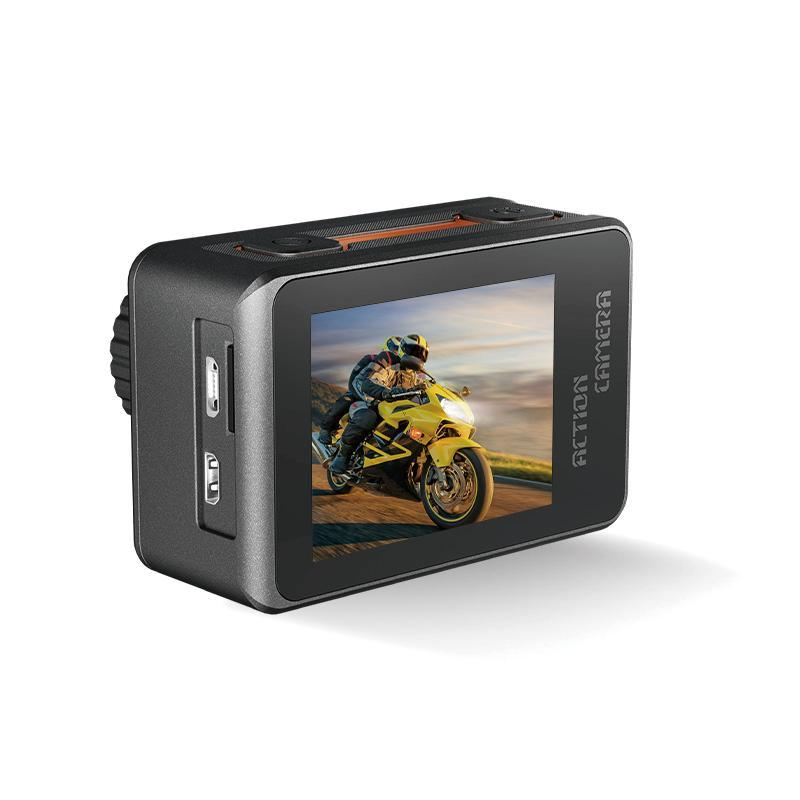
The AUSEK AT-M82TR configuration includes pre-recording for fishing. For a tackle brand, outdoor distributor or specialist store, the opportunity is to connect that feature with the way customers already fish, review their technique and share trips. The starting question is simple: which part of the experience would they like to watch again?
What the angler gains before pressing Record
Pre-recording keeps a recent segment of footage available while the function is active. Starting a recording can include the part still held in that buffer, followed by the action that happens next. The camera must already be on, in the appropriate mode and facing the action. It cannot recover an event outside its view or beyond its available buffer.
Think of a bank-fishing demonstration: the rod tip moves, the angler lifts the rod and then starts the recording when able to operate the camera. If the earlier movement is still buffered, the saved clip can show how the sequence began. Even a missed fish can leave useful footage for discussing timing and rod handling. A successful catch is not the only reason to keep a clip.
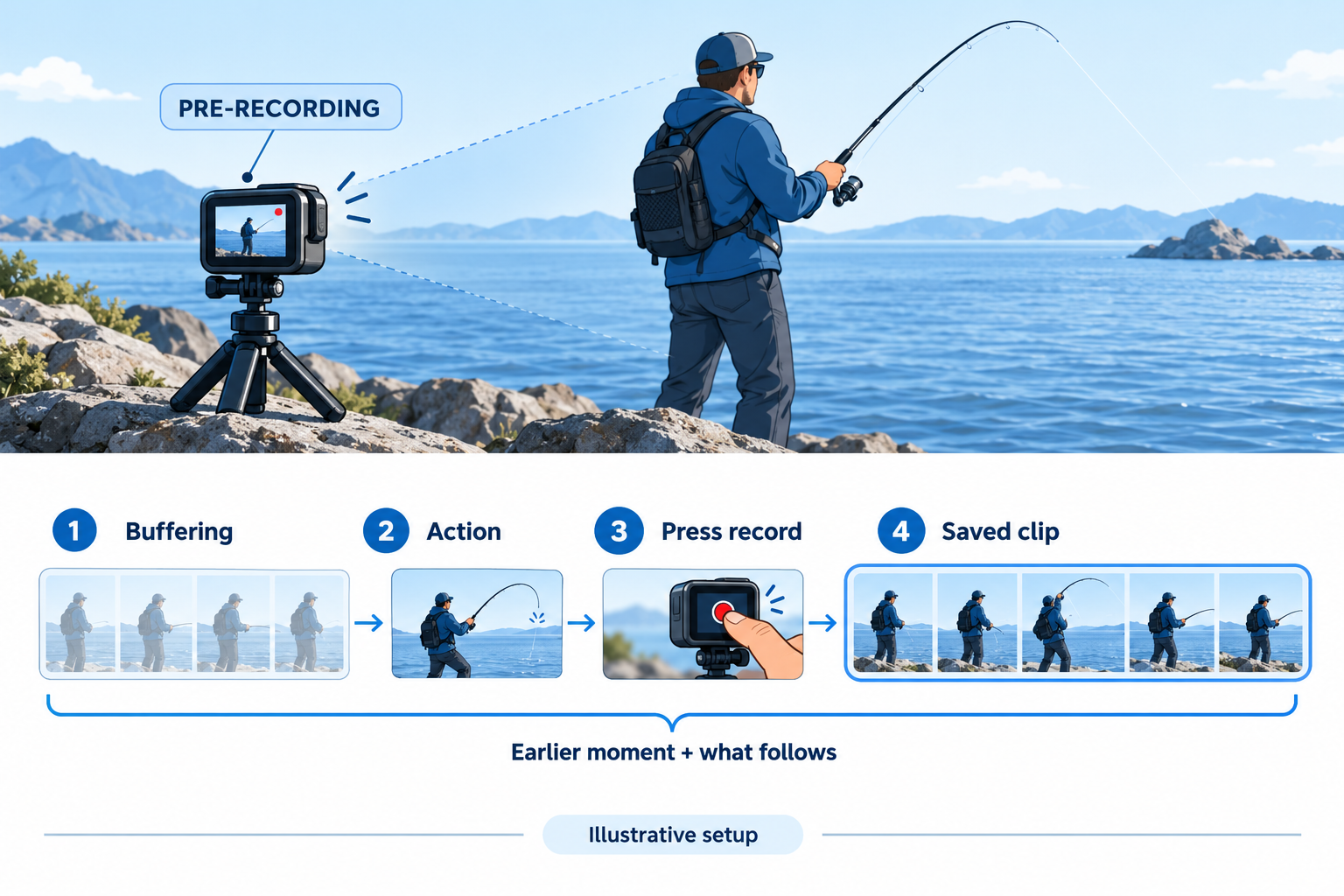
This is a different recording plan from documenting an entire session. Continuous recording can serve someone who wants to review the wait and changing conditions. Pre-recording is useful when the goal is a sequence around a few unpredictable events. For the AT-M82TR, establish the buffer duration and available recording modes with the selected sample before putting a time claim on a retail page.
Choose the view before choosing the bundle
A camera aimed at the angler’s face may miss the rod and hands. A position that captures hand movements may leave out a fishing partner helping nearby. Start by asking the customer to show the action they want to keep, then frame the whole movement. A short rehearsal with the intended mount reveals more than a still photograph of the installed camera.
For a U.S. tackle store, one possible demonstration is a bank angler lifting the rod while a fixed camera covers the hands and upper body. For a Brazilian distributor serving pesca esportiva shops, a boat-side setup could show an angler and a partner working within the same frame. These are demonstration options to adapt to the shop’s customers. Brazil’s Ministry of Fisheries and Aquaculture provides resources on the country’s recreational and sport-fishing sector for buyers exploring that channel.
Make the saved beginning visible in the demo
Begin with a simple tabletop sequence. Enable pre-recording according to the sample instructions, move an object through the frame, start recording and replay the file. Show the order of the movement and the button press alongside the saved footage. This lets a buyer see what was retained rather than infer it from a feature name.
Next, repeat the exercise in the intended fishing position. Keep the setup photo, the operating sequence and the original clip together. An online listing can use those three pieces to explain where to place the camera, how to begin and what the saved result looks like. An in-store demonstration can let the customer try the sequence themselves.
Build a local explanation around the same function
Use English narration and operating captions for the U.S. sales material, and prepare Brazilian Portuguese versions for the Brazilian channel. Keep the camera controls, sample configuration and saved sequence consistent across both. A Portuguese voice-over should explain the same operation as the English version, with the same distinction between pre-recording and recording a full session.
For a branded range, bring AUSEK the fishing situation you want to demonstrate and the proposed mounting position. The AT-M82TR offers a concrete starting point for discussing samples and established-model OEM options such as logos, packaging, manuals and accessory combinations. Contact AUSEK with the target market and recording idea; a final model quantity is not needed to begin that conversation.