If you are searching for action camera manufacturers in Shenzhen, you have probably noticed that the results mix together very different types of companies: trading firms that label themselves as factories, brands that outsource everything, and genuine manufacturers with their own production lines. For an overseas buyer — a brand owner, importer, wholesaler, or e-commerce sourcing team — the useful question is not just "which factory exists," but how production in Shenzhen actually connects to the business conversations you will have with it.
This article explains that connection: what a real Shenzhen production setup looks like from the inside, where quality control sits in the process, and how an OEM order moves from inquiry to shipment — using AUSEK, an action camera manufacturer based in Shenzhen, as a concrete example.
Why the "Factory" Label Alone Tells You Little
Because Shenzhen has a deep imaging-electronics supply base, companies with very different operating models all market themselves as "Shenzhen action camera manufacturers" — including firms that do not run their own production at all. So when you shortlist suppliers, the meaningful checks are structural ones:
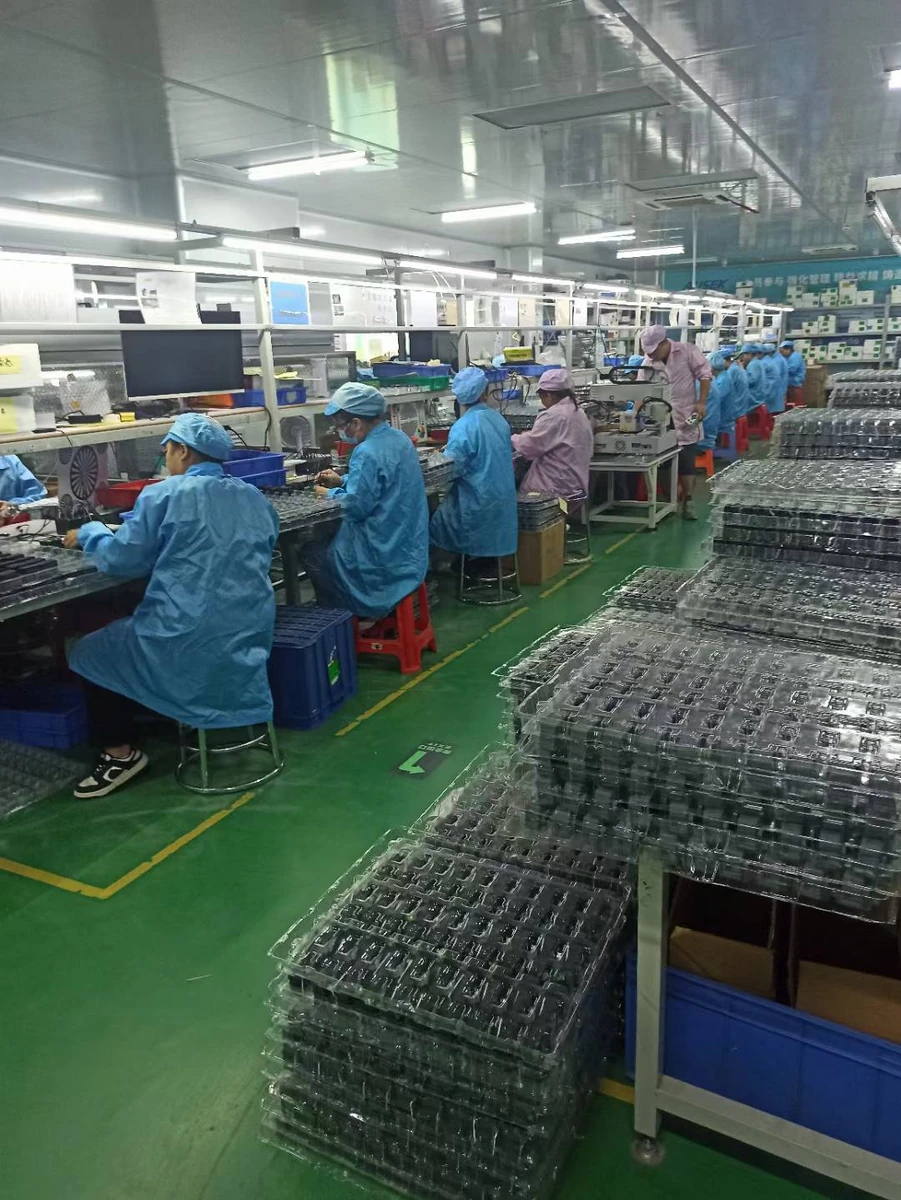
- Does the company have its own workshop, with defined areas for assembly, aging (burn-in testing), inspection, and packing?
- Is there a documented quality control process covering incoming materials through outgoing shipments?
- Can one team handle both your commercial questions and factory coordination, or will you be bounced between a sales agent and an anonymous plant?
AUSEK has been manufacturing imaging products in Shenzhen since 2008, and its operation illustrates what these checks look like in practice. Its Shenzhen workshop is organized into assembly, aging, inspection, and packing areas — meaning finished cameras are not simply boxed and shipped after final assembly, but pass through dedicated functional stages first.
Where Quality Control Sits in the Process
For an overseas buyer, "QC" is often just a checkbox on a supplier questionnaire. The more useful detail is where inspections happen, because that determines at which stage of production a problem has a chance to surface.
AUSEK applies a four-stage inspection structure, with each stage focused on a different point in the workflow:
- IQC (Incoming Quality Control): materials and components are checked before they enter production — this stage focuses on the condition of incoming parts.
- IPQC (In-Process Quality Control): inspection during assembly and production — this stage focuses on the production process itself.
- FQC (Final Quality Control): finished units are inspected as complete products.
- OQC (Outgoing Quality Control): a check carried out before goods are shipped out.
No inspection structure eliminates every possible defect, and these four stages should be understood as defined checkpoints in the workflow, not as a guarantee of outcomes. Still, when you evaluate any Shenzhen action camera factory, asking how their process maps to these four points gives you concrete lines of inquiry — but a clear description of the stages is only a starting point; whether the checks are actually carried out is something you verify through records and how the stages are scheduled in practice.
From Inquiry to Shipment: How OEM Works with a Shenzhen Factory
Once you have confirmed a factory is real, the practical questions are about what can be customized, minimum quantities, and timeline.
What OEM covers
On existing, mature camera models, OEM is about branding and configuration. For specific models, buyers can typically discuss logo placement, packaging design, printed manuals, accessory combinations, boot-up screens, and menu languages. Note that not every model supports every option — this is a per-model conversation, and it should be settled in writing before production starts.
AUSEK offers both unbranded products and customer-branded OEM on its existing action camera models, and supports sample orders before bulk commitments — which is the sensible path for any first engagement: order samples, evaluate them yourself, then move to volume.
Minimum quantities
For AUSEK's regular models, OEM minimum order quantity is 500 units; certain special models start at 1,000 units. Whether an MOQ at this level fits your plans depends on your own channel volume and budget — it is a decision each buyer makes against their own situation.
Timeline
Typical OEM production lead time is 20–25 days. This figure is affected by the model, order quantity, degree of customization, material availability, and how quickly branding files are confirmed. Note that this window does not include international shipping, so plan your total timeline accordingly.
Warranty and after-sales
Products carry a one-year warranty. Sample costs, payment terms, logistics, and the specific handling of after-sales cases are agreed per order — as with most manufacturers, these are contractual points to clarify before the first purchase order, not after a problem appears.
The Commercial Interface: One Team, Not a Relay Race
A frequently underestimated part of working with a Shenzhen factory is the interface itself. At AUSEK, the business team coordinates inquiries, samples, and orders while connecting with engineering and production. For a buyer, this matters practically: when you ask whether a specific model supports a specific customization, or when a shipment date needs confirming, the commercial conversation connects directly with the teams that can confirm the factory-side details.
When you contact any Shenzhen manufacturer, test this early. Ask a technical question about a specific model and a scheduling question in the same email. The speed and precision of the reply tells you a great deal about how the rest of the relationship will run.
Closing: Verify Structure Before You Commit
Before committing to any Shenzhen action camera manufacturer, the core verifications are the structural ones covered above: production reality (own workshop with defined assembly, aging, inspection, and packing stages), a QC structure the supplier can describe concretely, per-model OEM scope in writing, MOQ and lead time with the variables that affect them stated, sample availability, and warranty terms agreed contractually per order.
AUSEK meets these criteria as a manufacturer with production in Shenzhen since 2008, and its team handles inquiries, samples, and bulk OEM orders directly. If you are building an action camera line for your market, starting that conversation with a sample order is the lowest-risk way to judge fit.