An action camera with vertical recording is worth considering for people who plan their videos for a phone screen from the start. Sports clips, travel moments and short how-to videos can all benefit from choosing the frame before the action happens. The advantage is practical: the creator can check whether the person, equipment and movement fit the intended picture while there is still time to adjust the camera.
AUSEK AT-M90TR-A lists a 2.7K, 9:16 vertical recording mode. For brands and distributors, this gives the product a clear use-based explanation: prepare footage around a vertical composition instead of hoping a wide shot can be cropped successfully later. The mode’s resolution and aspect ratio should appear together wherever that capability is described.
Sports clips: leave room for the whole movement
A vertical frame can suit an individual demonstrating a movement or using a piece of equipment. But the first frame is only the beginning of the test. Ask the person to complete the action: reach upward, extend an arm, move sideways or step back. Check that the equipment stays visible at the widest part of the movement.
For a U.S. outdoor-electronics retailer, one possible sample clip is a rider standing beside a bike and demonstrating a gear adjustment. Show the hands, the adjustment point and enough of the rider to explain the action. If the subject travels a long distance across the frame, a different camera position or a wider composition may serve the sequence better.
Travel clips: keep a consistent shape without forcing every scene
A trip video may combine a person speaking, a tall building, a short walk and an object found along the way. Planning those clips at the same aspect ratio makes it easier to see how they will sit together in an edit. A creator can reserve space for the person’s head and hands at the time of recording instead of discovering that the crop removes them later.
A broad landscape or a group spread across a scene may need a different approach. The useful sales message is that the camera provides a vertical mode for footage planned that way. It is not necessary to describe vertical framing as the best choice for every travel shot.
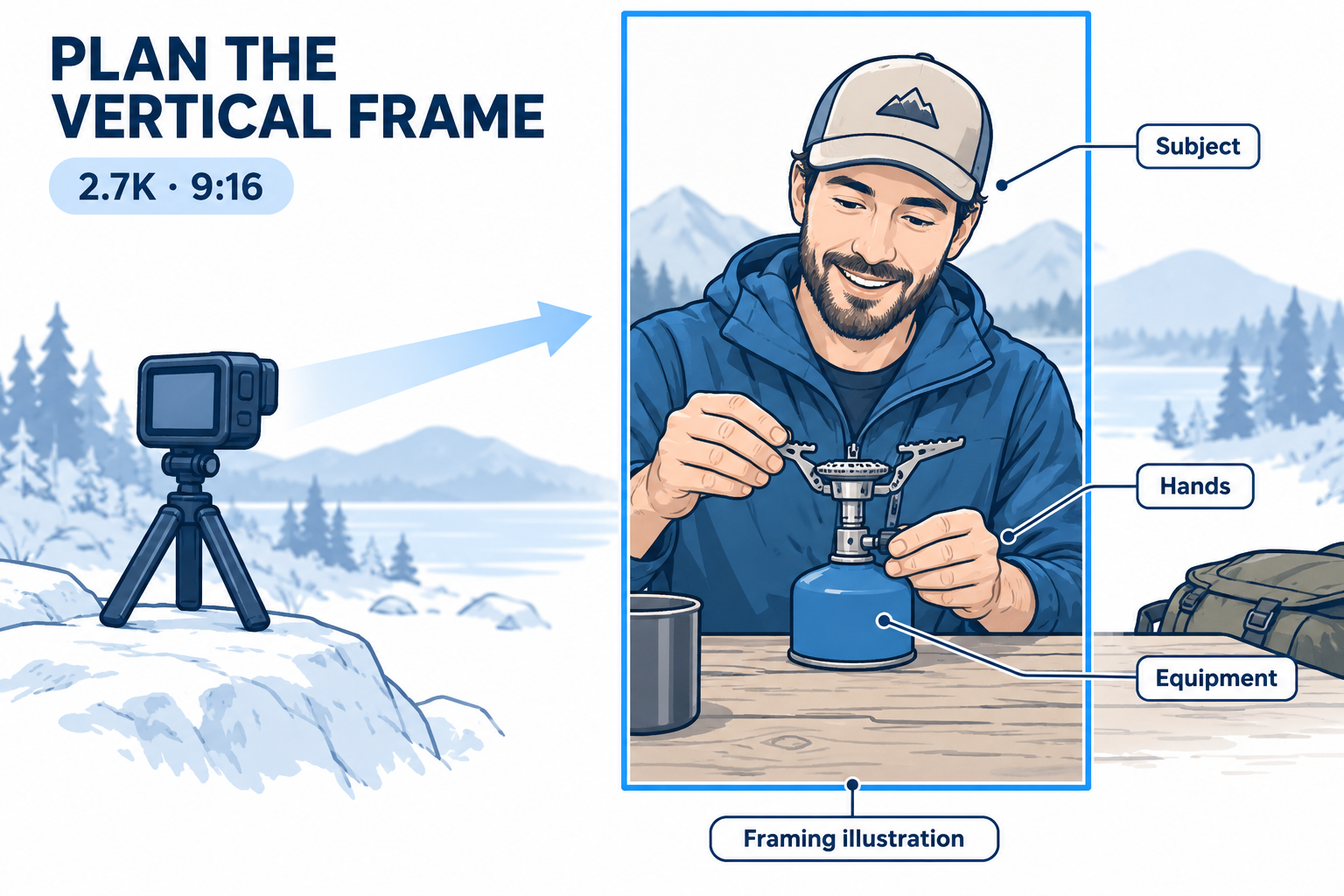
Tutorials: keep the hands and tools in the story
For equipment demonstrations, the most useful subject may be the working area. A Brazilian camera-accessory distributor could demonstrate a presenter taking an item from above the table, placing it in the center and explaining one operation. Rehearse the full sequence so a hand or tool does not disappear at the edge just when the important step happens.
Brazilian sellers also have a concrete retail-video context: Mercado Livre’s Clips guidance calls for vertical video showing the product in use, with good sound. A short equipment demonstration is therefore a relevant task to explore. Keep the operation easy to follow and add a close-up for a small detail. Prepare the final edit and export for the platform’s current requirements; the camera’s recording mode is the starting footage.
Connect the mode, the setup and the exported clip
YouTube’s own Shorts guidance describes vertical short-form video as a way to reach an audience. A retail demonstration can connect that familiar viewing format with the camera’s actual output: show the selected 2.7K 9:16 mode, the camera position and the resulting file. Review the export before preparing the final platform edit.
Use English captions for the U.S. version and Brazilian Portuguese captions for the Brazilian channel, while preserving the same mode label. Keep any headline for another recording mode away from the vertical example. A buyer should be able to identify the setting used without decoding a general specification chart.
To explore the AT-M90TR-A series, tell AUSEK which short-video activity you want to demonstrate and where the camera will be placed. That gives sample discussions and accessory selection a concrete purpose. For a branded product, include your target market and packaging language in the inquiry so the product explanation and OEM preparation begin with the same use case.